A beginner-friendly online privacy guide for 2026
Data brokers profit from your personal information, but you can secure your digital life in three straightforward steps:
- First, check if your data was leaked in recent breaches.
- Second, switch to privacy-focused browsers, emails, and passwords to stop new leaks.
- Third, remove your existing data manually or use automated services.
1. Check Your Data Exposure
A massive $400 billion industry harvests and sells your personal information. In early 2026 alone, nearly 500 major data breaches occurred.
Cybercriminals use this leaked data to run AI-driven scams or commit financial fraud using your data. Falling for these scams is common, but you have the power to stop them.
Start by finding out if your information is already public. You can verify your email and phone number against known breaches using a secure tool like HaveIBeenPwned:
If you find your data exposed, act fast:
- Freeze your credit cards immediately
- Move your important logins to a secure password manager
- Enable two-factor authentication
After performing the immediately needed actions, read up on our easy-to-follow article about data leaks and what to do if you find yourself to be a victim:
 BOP Authors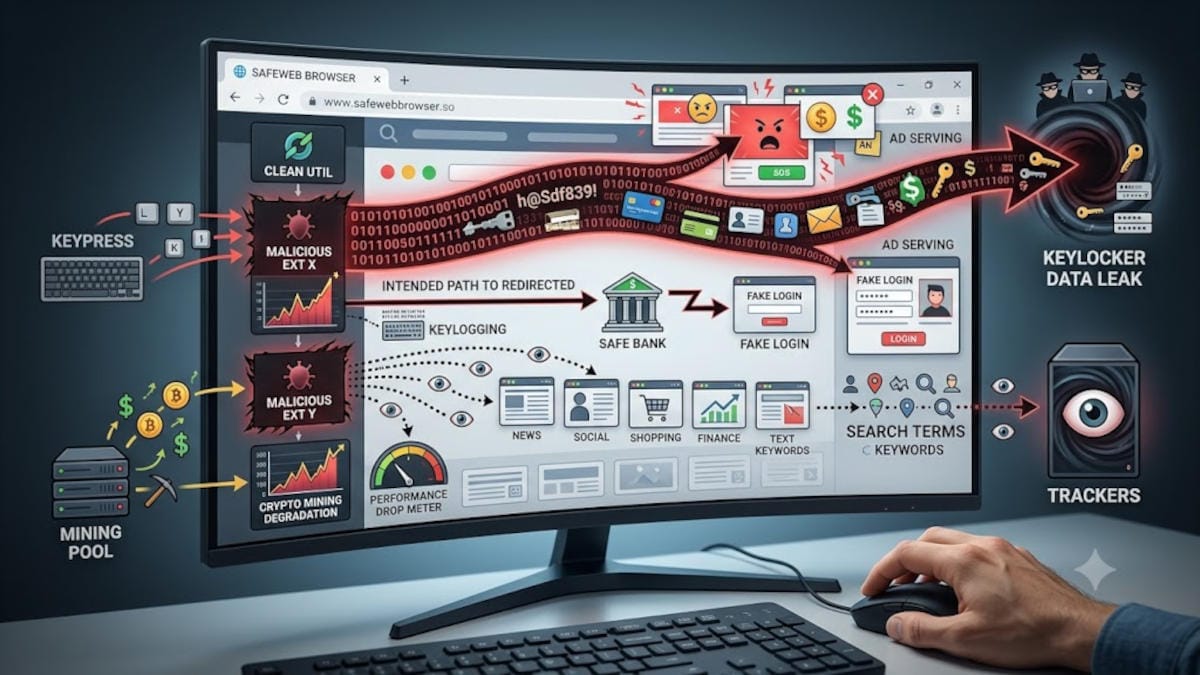
2. Stop Future Data Leaks
Companies you trust often scan your private data. This includes your internet service provider, your email host, and your online storage company.
You can drastically improve your daily security by making two simple changes:
- Switch to a privacy-first browser for faster, secure web surfing.
If you do not want to change your browser:
Install an ad blocker to stop hidden trackers. - Use a password manager to create and store complex passwords.
To cut off big tech scanning your documents and emails, the two most impactful changes you can do is to migrate to secure, encrypted services:
- Move your files to a secure, encrypted storage provider.
- Switch to an encrypted email service that refuses to scan your messages.
These are the low hanging fruits, covering you in case of a breach of your data.
To protect your digital life and household, we recommend getting familiar with the topic of encrypted, zero-knowledge ecosystem providers, so you are aware during daily internet usage:
 BOP Authors
3. Remove Your Existing Digital Footprint
Even after you secure your active accounts, your old data remains online.
Privacy laws like the GDPR give you the legal right to demand the deletion of your personal information.
You have two choices for removing this data from broker databases:
- You can manually request deletion from each major broker. This process takes significant time, as you must submit separate forms and monitor their progress.
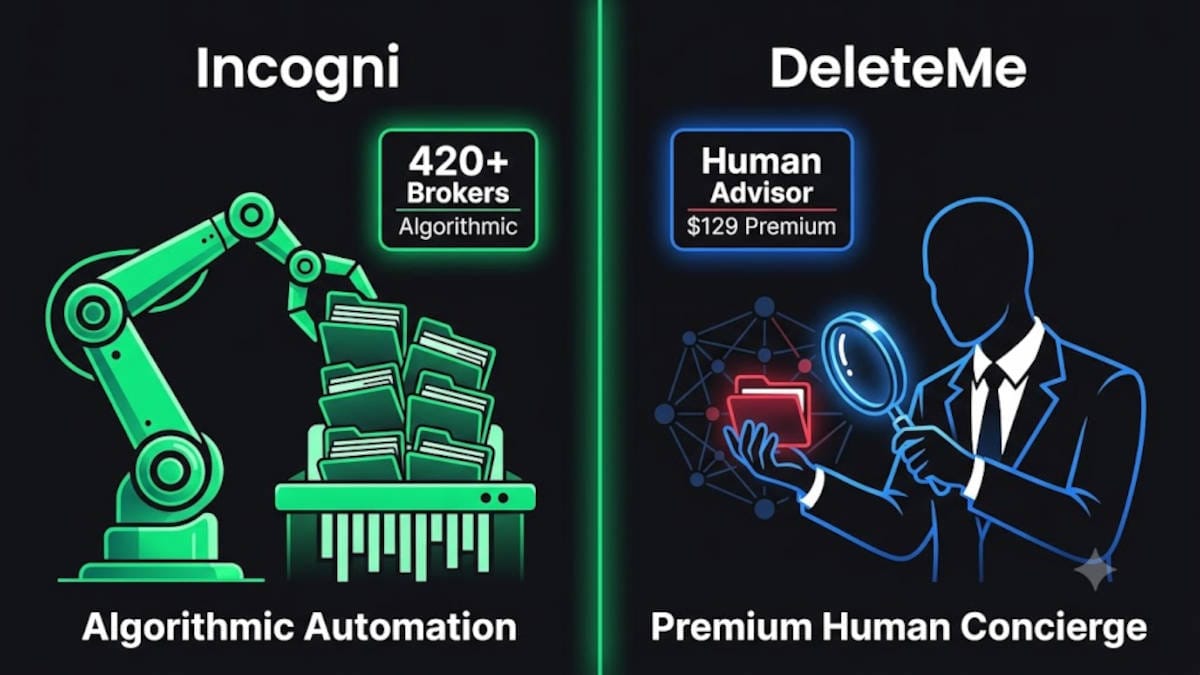
- Alternatively, you can use automated removal services. Tools like Incogni or DeleteMe handle the legal requests for you. They send deletion demands to hundreds of brokers at once and continuously monitor them to ensure your data stays offline.
Manually requesting removal of your data from the biggest brokers
It is entirely possible to manually request deletion of your data.
You'd need to choose which data brokers you want to target, and go through separate specific processes each - which are similar in the data they need, but differ in details and processing times:
 BOP Authors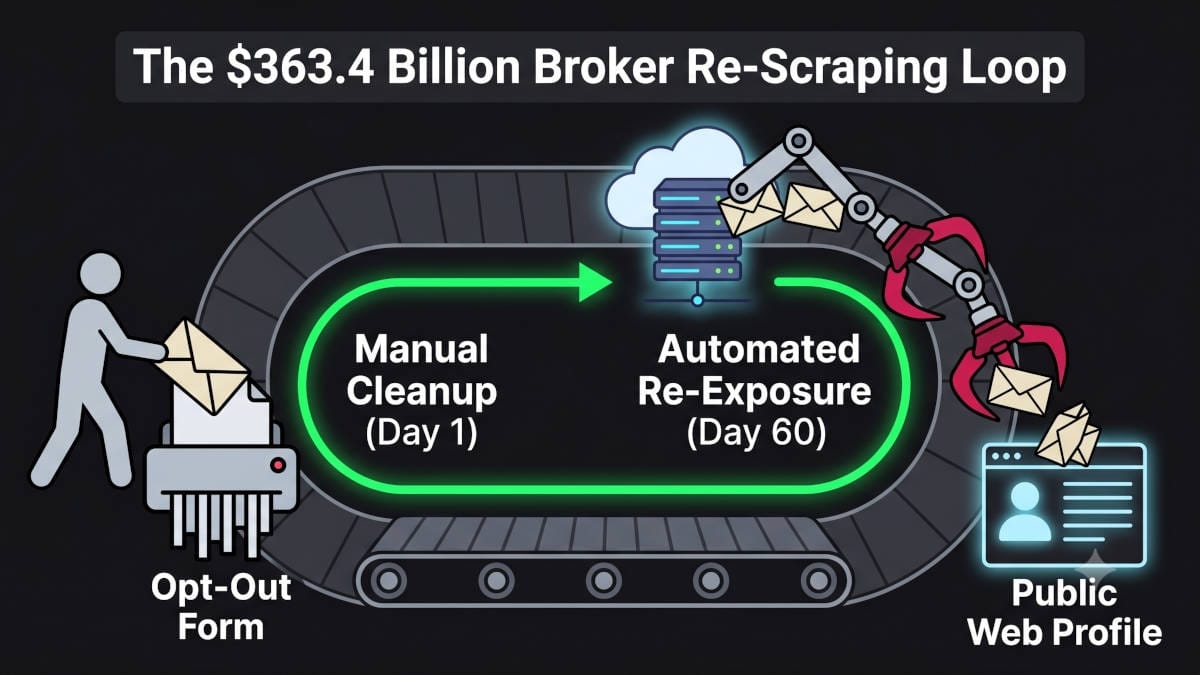
Automatically removing your data from hundreds of brokers
Instead of having manual data deletion eating half of your spare time, being quite frustrating and still not complete, you can use removal services taking on all the hard work for you.
Dedicated removal services send legally binding deletion demands to hundreds of brokers simultaneously, and automatically challenge them when your data inevitably pops back up:
 BOP Authors